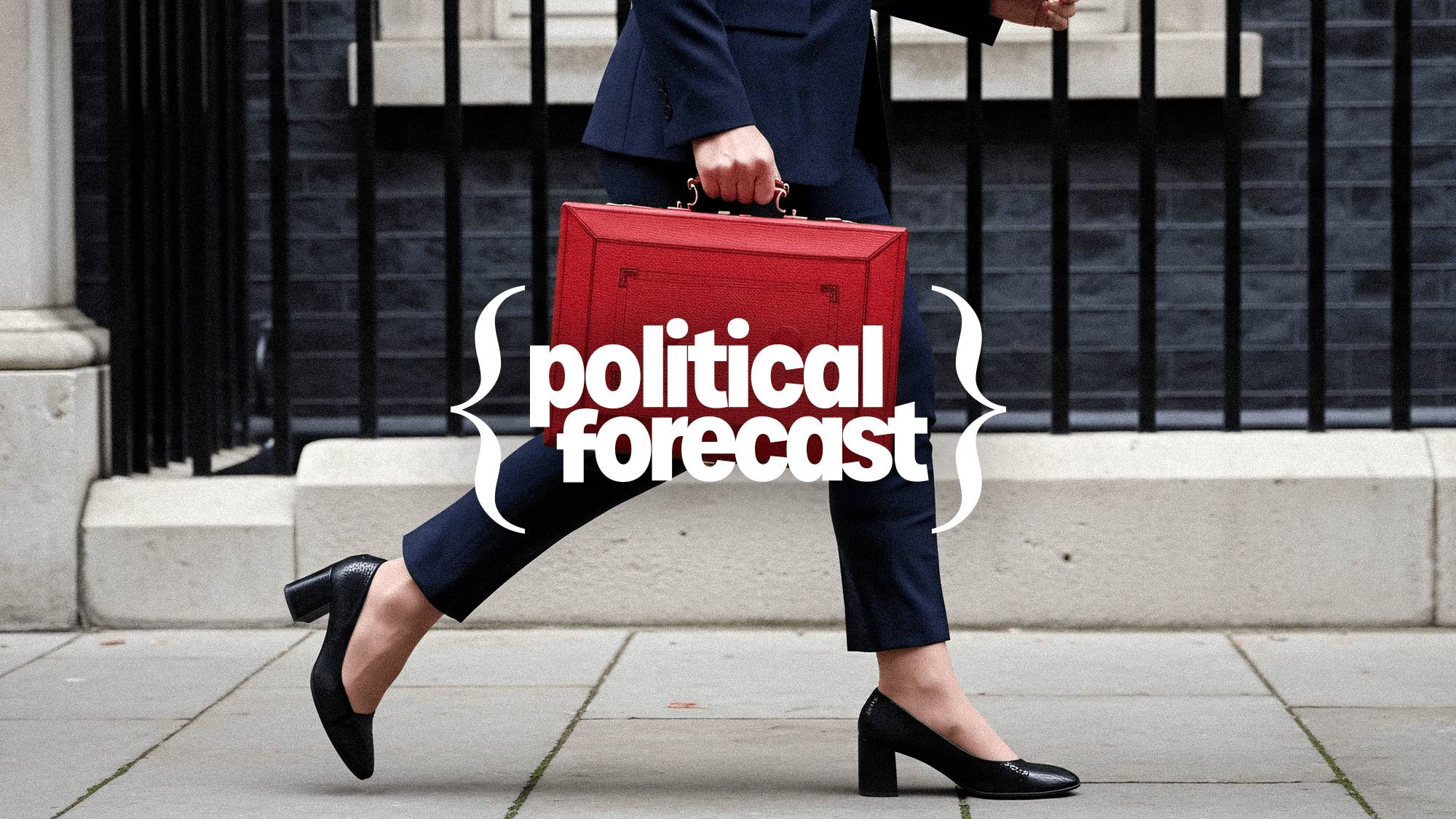
Issue three | Reeves' Budget: the political and fiscal challenges ahead
Budget Week Looms as Reeves Confronts a Fiscal Hole and Frenzy in Westminster
By Rt Hon Jonathan Ashworth, UK Chairman of Public Affairs at Weber Shandwick
“The Chancellor will deliver a budget based on Labour values,” Prime Minister Keir Starmer insisted – a reassurance, perhaps more in hope, after weeks of ricocheting stop-start briefings about what will or won’t be announced on 26th November. It’s shaping up to be the most consequential moment of the Parliament and perhaps of Rachel Reeves’s and Keir Starmer’s political future. The question dominating Westminster remains how will Rachel Reeves plug the hole in the public finances without detonating what’s left of the government’s political capital?
The scale of the challenge is stark. UK growth, though outperforming lots of the G7, is still anaemic – and that was before the cyberattack on Jaguar Land Rover flattened output. Inflation may have edged down, but remains above target, with food price rises continuing to squeeze families already stretched to their limits.
Unemployment is ticking up. Meanwhile, long-term sickness continues to rise, warping the labour market, pushing welfare bills higher and leaving critical skills shortages unresolved.
Against that backdrop, Reeves is staring at a possible fiscal shortfall some say as high as £25 billion. That’s money she must find if she is to meet Labour’s fiscal rules and maintain market confidence. Breaching those rules, however backbench Labour MPs wish she would, simply isn’t an option.
The UK still depends heavily on global investors lending to us – the “kindness of strangers” – and that kindness is finite. After the chaos of the Truss mini-budget, no Chancellor can afford to test gilt markets’ patience again.
A Welfare Reset Gone Wrong
Reeves’ room for manoeuvre has already tightened. Attempts to rein in the soaring welfare bill were slapped down by Labour MPs over the summer, forcing ministers into an ungainly retreat. The current social security system lifts too few children out of poverty and does too little to support people back to work. Reform is needed, but unlike Blair and Brown, whose welfare-to-work agenda was years in the making, Labour’s proposals this time arrived abruptly, without a clear narrative or coherent explanation, leaving MPs unnerved. (Expect newish Work and Pensions Secretary, the shrewd Pat McFadden to bring forward new proposals aimed at getting the almost one million young people in neither education or employment or training into some sort of work or training.)
Simultaneously, the Prime Minister has categorically ruled out a return to austerity. Cutting public services is politically, economically, and morally off the table. Kemi Badenoch has rashly committed herself to cutting public spending by £46 billion. Labour spots an opportunity to bash the Conservatives and Reform as harbouring plans to impose swingeing cuts in the NHS. Investment with Labour versus cuts under the Conservatives or Reform will be a key dividing line at the next election.
Reeves, however, is still left to navigate a narrow, treacherous path. She will want to invest in public services for the future. However, with slower global growth fuelled by tariff wars, defence spending commitments, and the long-term scarring of Brexit the fiscal bind tightens further.
Read my lips: Tax is going up
Starmer and Reeves were elected after hammering Rishi Sunak for presiding over jumbo increases in the tax burden. Sixteen months later, the Chancellor is confronting the cold reality that she only has one lever left to pull: tax.
A deeply unenviable position, especially after she assured the CBI last year that she wouldn’t be coming back for more.
Just two weeks ago, Rachel Reeves was actively laying the groundwork for potential income tax rises, a prospect that had become “priced in” among political insiders. She even held an unusual breakfast press conference to declare that “each of us must do our bit.” The logic was clear: a progressive, broad-based rise with protections for lower earners would deliver steady revenue and help tame inflation.
However, it would also breach Labour’s manifesto – a deeply risky move especially after a politically bruising week overshadowed by renewed questions about Starmer’s leadership. With the OBR apparently projecting a slightly smaller fiscal gap thanks to buoyant wage growth, that option was sidelined in what was seen as another u-turn.
The Search for Revenue: A Smorgasbord of Smaller Moves
Instead, we are now expecting a so called smorgasbord of targeted tax changes said to include:
- Extending the freeze in income tax thresholds, pulling more earners – including pensioners – into higher bands as wages and the state pension rise.
- A likely mansion tax-style levy on properties over £2m, placating Labour MPs pushing for a wealth tax in all but name.
- Higher gambling levies, with horse racing protected but online betting and slot machines facing steeper taxes – revenue that could part-fund ending or abolishing the controversial two-child benefit cap – a move long demanded by former Labour Prime Minister, Gordon Brown.
- Possible restrictions on salary sacrifice schemes that allow workers to gain tax advantages through workplace pension contributions.
- A mooted three pence-per-mile levy on electric vehicles, a long-anticipated step in replacing diminishing fuel duty revenue.
While Downing Street and the Treasury might be relieved to have sidestepped a damaging income tax U-turn, they remain in choppy political waters. Last year’s reliance on a string of small, highly technical revenue raisers only served to mobilise well-organised opposition groups and offered little political payoff.
A Glimmer Beyond the Gloom
And yet, it is not all bleak. Interest rates have tracked downward, with further cuts expected. The government is banking on a pipeline of investment – in housing, skills, infrastructure, and clean energy – to reignite growth and lift living standards. Efforts to make the UK an AI powerhouse are taken seriously with ministers banking on productivity gains and new jobs as the consequence.
Living standards and affordability remain the government’s focus.
Labour strategists know the next election will turn on the cost of living. If Reeves and Starmer – and it remains a big if – can start to show measurable progress over the next 18 months, the political mood could shift considerably. By the time the Chancellor stands up to deliver her third budget in 2026, Britain’s economic landscape – and Labour’s prospects – may look very different indeed.
Former Labour MP for Leicester South, Jonathan was a long-standing senior member of Keir Starmer’s shadow cabinet and played a central role in the Party’s 2024 general election campaign.
To receive future issues of the Political Forecast direct to your inbox, subscribe here.