How AI is shaping the modern newsroom
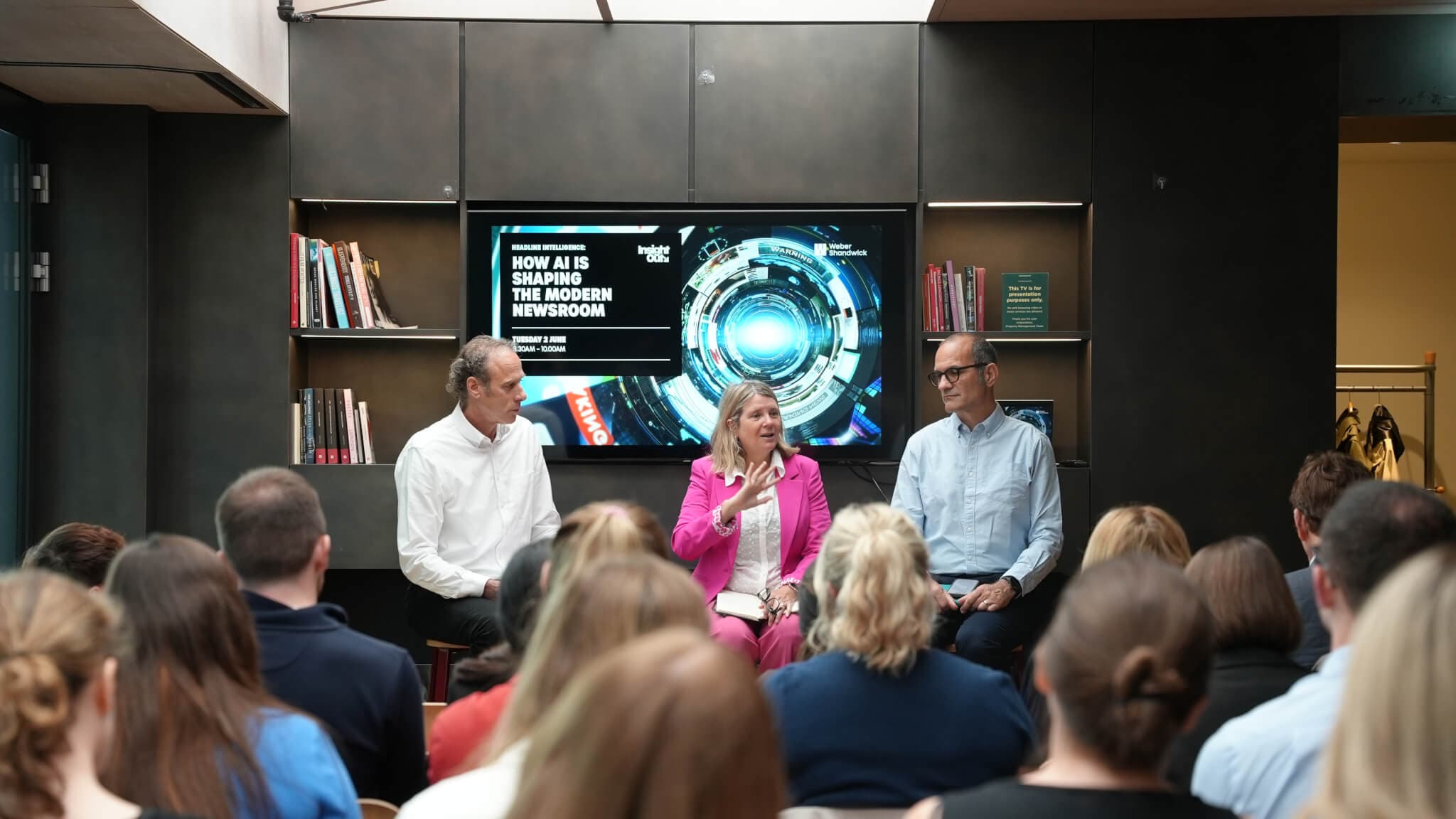
The media landscape is undergoing a turbocharged revolution. To understand how AI is reshaping journalism, newsrooms, and the wider news agenda, Weber Shandwick recently hosted a breakfast briefing, Headline Intelligence.
Moderated by Philip Pank, EVP, Weber Shandwick, the panel featured frontline insights from Mark Sellman, Technology Correspondent, The Times and Jane Wakefield, freelance journalist and broadcaster, formerly BBC.
Here are the key takeaways on how AI is transforming the news cycle, and what it means for brands striving to maintain visibility and reputation in an AI-first world.
1. The real AI revolution is in productivity and research
While chatbots grab the headlines, the most significant impact of AI in the newsroom so far has been behind the scenes.
- Transcription and data: Mark Sellman noted that journalists have experienced a 15 – 20% productivity bump thanks to AI transcription tools. Jane Wakefield highlighted how the BBC is leveraging AI to quickly parse through hundreds of local democracy stories to find viable leads, generate “at-a-glance” summaries, and even scan thousands of hours of wildlife documentary footage to spot animal activity.
- Hyper-specific research: search habits are fundamentally changing. Sellman noted he rarely uses traditional Google search anymore, opting instead for tools like Claude, ChatGPT, Gemini, and Google’s NotebookLM. By uploading massive regulatory documents (such as Ofcom codes of practice) into NotebookLM, journalists can instantly interrogate complex data and extract precise answers.
2. The human element is more valuable than ever
Despite AI’s research prowess, both journalists firmly pushed back against using AI to write their first drafts.
- The premium on originality: for top-tier publications, if information already exists within a Large Language Model (LLM), it is not news. Sellman emphasised that his job is to find the stories that aren’t already out there. Writing is not the hard part of journalism; uncovering exclusive information is.
- Human-to-human storytelling: Wakefield stressed that AI cannot replicate the nuance of a sit-down conversation. The most compelling news – such as deeply personal human-interest stories – comes from building trust and rapport.
3. The shift from SEO to GEO
With journalists and the public alike shifting away from traditional web searches in favour of AI assistants, the mechanics of brand visibility are evolving.
- Brands must look beyond traditional SEO and understand Generative Engine Optimization (GEO). It is no longer just about ranking on a search page; it is about ensuring your brand’s narrative and data are effectively ingested, understood, and surfaced by the AI agents that reporters and consumers are increasingly relying on.
4. Trust, verification, and the rise of “Rogue Agents”
As AI lowers the barrier to creating convincing fake text and imagery, the public is being forced to “think like journalists” and question the validity of what they see online.
- The flight to quality: The saturation of AI-generated content is making established, trusted news organisations more critical than ever. Both the BBC and The Times have strict policies against AI-generated writing, relying heavily on fact-checkers to verify digital content.
- Future risks: Looking ahead, both panelists predict an increase in AI-related “doom stories.” As businesses rapidly deploy autonomous AI agents to handle tasks, we are bound to see highly publicised errors – from wiped databases to “rogue agents” publishing defamatory content.
What this means for brands and communicators
To successfully navigate the AI-driven newsroom, communicators must remember that the core value exchange with journalists hasn’t changed: they want exclusive, high-value information.
- Don’t just say “AI”: Pitching a company as an “AI business” is no longer a differentiator. Every business is using AI. Journalists want to know the specific, real-world problems your technology is solving.
- Refine your pitch: With journalists receiving hundreds of press releases daily, an AI-generated mass pitch won’t cut through. Brands must prioritise highly targeted, human-centric storytelling that offers genuine exclusivity.
In the spirit of the “human premium” championed by our panelists, this article was drafted with the assistance of our AI platform, HALO, and carefully edited and refined by a human member of our team.
Weber Shandwick helps brands navigate this shifting landscape through our Weber I/O offerings, including GEO, AI-enhanced scenario planning, and media training for the modern news cycle.